I spent a weekend in a writer’s workshop earlier this year. It was a wonderful time facilitated by Patrice Gopo. patricegopo.com There was a writing sprint – 12 prompts in one hour. I don’t write that fast, but others can. One prompt sticks in my mind: Who’s responsible for your mother’s suffering? Go ahead. Spend five minutes on that.
But that’s not what this post is about. It comes from a different prompt. Describe a morning that you woke up without fear. I really wanted to get this writing out to you months ago, as I felt good about what I wrote. But I had to find that photograph that directed my writing, and had to be a part of my story.
Finally found it today, and so friends, here’s a story.
I arise from my warm bed, into the darkened beach house. I switch on the coffeemaker, and silently leave the house filled with snores and slumber. Stepping onto the high deck, overlooking the ocean, standing on boards weathered by sun and spray, I look towards the horizon. Only a glimmer of the dawn to come, the lighter grey making only the slightest division between water and sky. I lower my eyes to the beach below, and slowly make my way down the stairs to the sand.
Walking in the boundary between water and solid sand, my senses are taking in the sounds and smells of the surf. The caress of the water across my feet, and the warm offshore breeze carrying the earth and the bayou out to sea.
Walking northward along the beach, the brighter part of the sky behind me, I view the liminal space between sand and water. The shiny light grey of the water washing up the beach. Transforming into a patchwork, and then fading to the dark sand.
No one else is witnessing this scene. This is for me, only.
Up and over each groin, jutting rocks out past the surf, the futile attempt to hold onto the sand. Ever so slowly, the sky’s color changes – grey, giving way to lavender. The ocean’s color, reflecting the sky also changes. The purple water, fringed in the white foam, pushing its way up the beach fades into darkness. I continue to walk, over groin and over groin.
Purple giving way to dimmest shade of orange. Water, sometimes purple, and sometimes orange shushes its way up the beach, like a parent comforting a child. I look back towards where the sun will eventually rise, much brighter than before to my dark adjusted eyes. As if my attention had been called, the first flight of pelicans tuck themselves below the wave top. Effortlessly gliding, nestled in the boundary.
Lighter still, water and sky, I turn back. Groin after groin, I walk back. The seagulls harsh call awakens. Walking up the stairs, quietly filling a mug with the dark brew, silently stepping back onto the porch, I sit down in the pastel blue rocking chair.
Steam lightly fogs my glasses, still waiting for the sunrise.
Watching carefully for the triangular fin that announces the dolphins.
Quietly waiting for my lover to join me on the porch.
Thanks for hanging in there – there are more stories coming soon.
I’ve not be writing much lately. Part of the reason is certainly not making time to write. The other part is certainly a global pandemic, and making a concerted effort at self-care. The latter I do not regret.
But there’s been an opening to preach at my church, Edgewood United Church, and I grabbed at the chance. At the beginning of the church bulletin, we will often put a quote or a short poem. I’ve chosen an essay by Parker J. Palmer, called ‘Everything Falls Away‘.
Meditation
Sooner or later, everything falls away. You, the work you’ve done, your successes, large and small, your failures, too. Those moments when you were light, alongside the times you became one with the night. The friends, the people you loved who loved you, those who might have wished you ill, none of this is forever. All of it is soon to go, or going, or long gone.
Parker Palmer – Everything Falls Away – excerpt
The Wise Women
December 5, 2021
Edgewood United Church
Harold Beer
Our scriptures today include two elder women: Sarah and Elizabeth. Both of them are stepping into new roles, doing new things, and in a sense, saying that it’s not too late. The portion of the meditation I’ve shared with you speaks to how Sarai may have felt about life. The fear that her life may come to an end without a hope of making a difference. And then God enters the scene. Sarai is transformed. Indeed, her role changed so much that God tells Abraham to call her Sarah. So it’s no wonder that in studying these scriptures over the past few weeks that I’ve been thinking about the elder women I have known. The older and wiser women that have been present, and have done or said something that changed my way of thinking or the direction my life was heading. Are you thinking of such a woman right now? I suspect that you can think of such a woman (that probably wasn’t your mom) that gave you the affirmation or guidance at just the right time, even if you didn’t notice it at time. Looking back from who you are today, to then, their contribution becomes clearer.
Who was that woman in your life? What did they do or say? Bring that memory to the forefront for a few moments. I’ll share my memories in a few minutes.
In our reading from Genesis today, we hear a story of a couple named Abraham and Sarai. In preceding verses, God gave a man named Abram his new name of Abraham and he’s told he will become the father of many nations. In the Bible, and today, a new name is a sign of transformation.
God tells Abraham that Sarah will receive God’s blessings and that ‘she will become nations, rulers of people will come into being from her’. So clear this was to Abraham that he laughed. “Abraham fell on his face and laughed.” Rolling on the floor, laughing out loud.
Laughing in disbelief. Laughing into the anxiety of doing something unexpected and new. Each of us has been there, yes? Abraham and Sarah had God to encourage and affirm their new path. Their path became a thread that weaves throughout our bible.
In thinking about Sarah and Elizabeth, I remember an influential elder woman that made a difference in my life. Bonnie Offrink was a presence, tall and stocky, with a lot of life experience to share. Bonnie was my wife Marcia’s kindergarten Sunday School teacher. Sunday school teachers rock. Now, Bonnie and her family had a habit of going away for months on end doing what is called mission work, helping and teaching around the US and then coming back to the small Presbyterian church on Hartland Road to tell the story of their adventures. It was these stories that held the attention of young Marcia, and are directly responsible for Marcia’s mission work in Alaska when she was sixteen, and her leading and coordinating volunteers at the Morgan-Scott project in Tennessee a few years ago.
Marcia’s path entwined with Bonnie’s some years after Kindergarten after Marcia dropped out of Alma College after a semester and began work at the University Hospital in Ann Arbor. Bonnie, widowed and raising a young boy was just beginning the Ph.D program in Social Work at the U of M. Marcia moved in with Bonnie, both to help out, and to cut out her commute from Hartland to Ann Arbor on US-23. It was Bonnie that insisted Marcia to give college another try at the nearby Eastern Michigan University in Ypsilanti. The university that I was attending.
Bonnie was the kind of woman to whom it was clear what you ought to be doing with your life, and often she was right.
I’d been dating Marcia for about six weeks when Marcia called to invite me on a trip she was taking to Kentucky with Bonnie. I turned her down, on the basis of something that’s been lost to history. Shortly after the call with Marcia, Bonnie called. She was persuasive, citing their safety, and how I would regret it if something should happen to them. How could I refuse? Bonnie had been a social worker at the Red Bird Mission in Southeastern Kentucky, and the trip was to visit old friends.
Two of her friends, Cy and Tilde, lived up in a holler, or valley. We travelled east from Red Bird on a paved road, that turned to gravel, and ultimately to dirt.
As the five of us sat under the big shade tree in the front yard, sipping sweet tea, Cy asked a question: ‘Now when are you two youngins fixin’ to get married?’
Later that evening, back at the Mission, on a hot and humid night, with a hillside covered in fireflies, we came to an answer to his question. That Bonnie.
Bonnie completed her doctorate at 60, and used it in her new career for another ten years until retirement at the age of seventy. Bonnie epitomized ‘It’s not too late to do new things’.
In the retelling the story of Elizabeth and Mary, we hear of Mary, a younger woman that visits, and moves into Elizabeth’s household for a time.
Mary, pregnant under rather mysterious and scandalous circumstances shared her doubts in our scripture of last week. And now, Mary makes a really smart decision to live with Elizabeth for a few months. Can you imagine the affirmation that Mary felt when Elizabeth told her “Blessed are you among women, and blessed is the fruit of your womb”? There’s no record of the stories that Elizabeth and Mary shared together. But we can imagine. I imagine there was talk about the angelic visitors. Talk of family, and reactions the families had to their news. (The good news of great joy comes later on) I imagine Mary appreciated the encouragement and experience of the elder Elizabeth, and Elizabeth appreciated the help and presence of Mary.
We remember and retell the stories of Sarah, Elizabeth, and Mary. In the season of Advent, we look forward to what comes next, and look back to where we have come. In the looking back, we can see just how important Sarah, Elizabeth and Mary were. Their stories are threads. The threads that tell us that it’s not too late to begin something new. Threads that tell us to be present, to share our experiences and encouragement in the lives of others.
The first stanza that is our mediation this morning seems bleak. Just as life can seem bleak. I envision a person seeing the world through the sharp lens of cynicism. To them, nothing matters as everything comes to an end. But in the last three stanzas I am about to share, this person that I imagine transforms. I imagine the wise women transforming their life in the hope and love that brings to them the realization of a more colorful fabric:
Everything falls away, except the thread you’ve followed, unknowing, all along.The thread that strings together all you’ve been and done, the thread you didn’t know you were tracking until, toward the end,you see that the thread is what stays as everything else falls away.
Follow that thread as far as you can and you’ll find that it does not end, but weaves into the unimaginable vastness of life. Your life never was the solo turn it seemed to be.It was always part of the great weave of nature and humanity, an immensity we come to know only as we follow our own small threads to the place where they merge with the boundless whole.
Each of our threads runs its course, then joins in life together. This magnificent tapestry –this masterpiece in which we live forever.
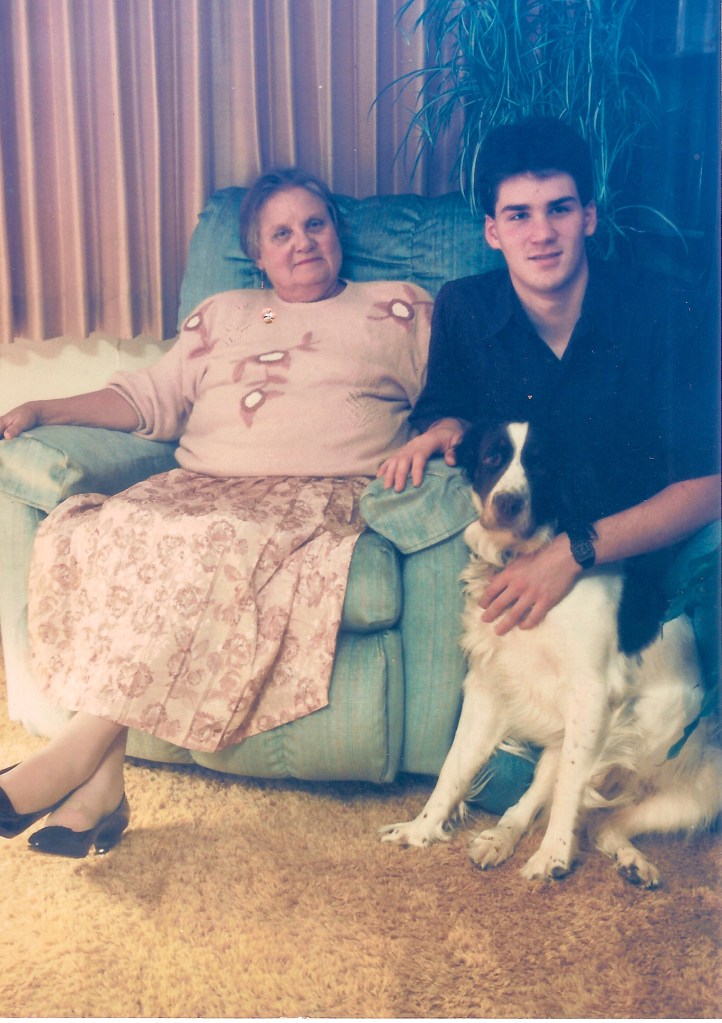
This is the centenary of my mom’s birth. Lucille’s one hundredth birthday, had she not died some thirteen years ago. I’ve been thinking a lot about what she lived through.
World War I just not two years gone when she was born. I wish I would have had a chance to talk with my grandma and my mom about what it was like to have a German surname in those days. I can imagine that it didn’t always feel safe.
She was a young girl during the Great Depression and scarcity and poverty are hard taskmasters. I’m pretty sure the family kept a cow and had chickens in the village of Dexter, and so they had food, if not money.
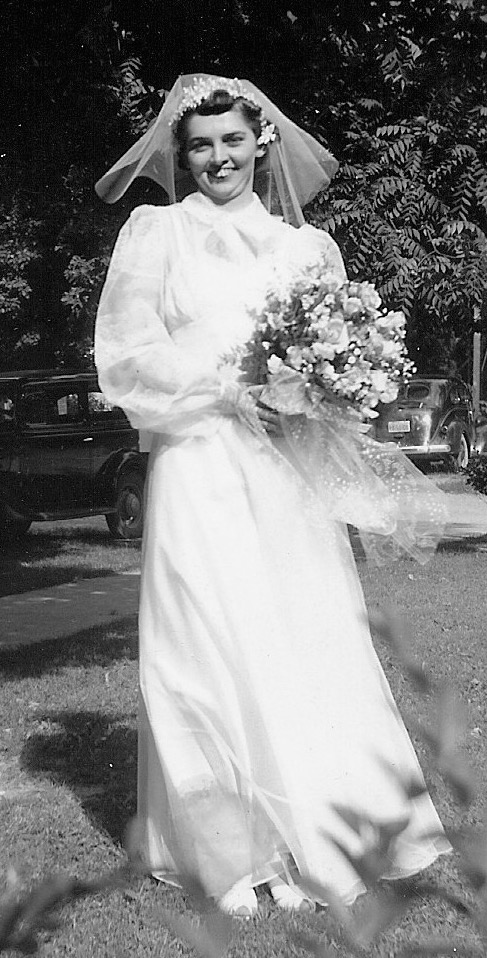
She was married the summer of the 1939, the start of World War II, although it would take over two years before the US would get involved. Her first child, John, was born when she was only 22, and young men were enlisting or being drafted into military service. My dad waited until he was drafted into the Army, then shipped off to Burma for the duration plus six months.
Sometime later, her in-laws moved in and stayed with them until they died in the early 1960’s. I love my in-laws, but I can’t imagine six, then seven, and finally eight people in a four bedroom house with one bathroom – let alone in-laws that probably were clear about how things must be done.
Parents are a product of all that they lived through before becoming parents, and they do the best they can. I don’t think my mom met all the needs of her children, but she did the best she could, was loving, wasn’t abusive, was consistent and kind. One might want more, but kids rarely know what their parents are dealing with.
She was amazingly graceful as it came time to sell the big four bedroom house as her driving skills became worse and needed additional care. When it became more difficult for her to manage, and more difficult for Marcia and I to spare the hours of travel to get her to appointments, we moved her closer to us. And when she finally moved in a nursing home, again, she accepted it with grace (or at least never let on that it was less than good).
Whenever musicians came to the nursing home, she always had two requests: Jesus Loves Me, and When The Saints Go Marching In.
The last words she said to us were ‘Happy Anniversary!’ as she died on our 25th wedding anniversary. The solemnity of the minutes after she died with three of her four children present (the fourth had transportation issues) was completely broken by a television suddenly blaring from down the hallway a scene from My Fair Lady, the musical number ‘I Could Have Danced All Night’.
Remembering my mom on her birthday, and the anniversary of her death is always with a smile and a laugh of that time.
I have pretty vivid memories of August 22, 2000. It was a Tuesday, and I simply don’t remember what the morning and workday were like. I imagine they were unremarkable. An event on the bike ride home was life-changing, and in the moment, hours and a few days forward had a very real possibility of being life-ending.
I was rolling westward on Mount Hope, a major four lane thoroughfare from Okemos on the east, through East Lansing and Lansing. I was approaching the intersection of Mount Hope and Aurelius. This corner has a rural feel while being well within the city limits of Lansing. The northeast corner is a wetland, and former toxic waste site. Across Mount Hope is Fenner Arboretum, acres of trees and prairie. The southwest corner is a vast cemetery, and the northwest corner were greenhouses and a tree nursery. What it did not have was anyone or any place to get help.
Slowing to stop, I tilted my head to look at the red light facing me. A sharp pain suddenly occurred, and I thought, ‘Oh, great. A crick in my neck.’ In only a couple of seconds, the ‘crick’ was re-defining what 10 was on the pain scale. In just a few seconds more, I was sure this was either a stroke, or a brain aneurysm. With no place to get help, I resigned myself to bike the rest of the way home. The light turned green, and I began to pedal. Once through the intersection, a new thought, ‘I can ride my bike, so I guess it’s not a stroke. An aneurysm, then. Not good.’
I made it the mile and a half home, shoved my bicycle into the garage, and made my way weakly into our house. ‘Hello, Sweet Pea,’ greeted my wife, Marcia, ‘Are you okay? Do you have a migraine?’ My one syllable reply ‘No’ must have told her something. ‘Do you need to go to Emergency? ‘Yes.’ I muttered.
I think I went to the bathroom, changed from cycling shorts to regular shorts, and walked to the car. “Take the pork chops out of the oven in fifteen minutes. I’ll be back, or get someone to stay with you. Dad will be alright’, said Marcia in a raised, but calm, voice.
We went to the nearest emergency department, a mere five blocks away. For a couple of minutes, we waited patiently in the waiting room. The person ahead of us, an elderly man was speaking loud enough for us to hear, about a fall he had four weeks ago, and was just now seeking treatment. ‘I think I’m going to throw-up from the pain’, I told Marcia. Apparently, magic words in triage. I was quickly moved to a wheelchair, the other man moved aside, and I was taken to an exam room while Marcia was finishing the paperwork. My wristband had my arrival time of 18:13 or 6:13 PM, less than 25 minutes from the intersection where the pain started. ‘He needs a head CT, and morphine for pain’, the doctor ordered. In just a few minutes, the doctor reports back: ‘You have bleeding in your brain. A sub-arachnoid hemorrhage, an aneurysm most likely. We’re going to need to transfer you to Sparrow’s Neurointensive care, but there aren’t any beds available in the unit, so we have to wait until they clear a bed.’
I felt anxious, and scared; bad, but not too bad. My pain was tolerable, until it wasn’t. It was already more pain than I had ever felt, and now it was even worse. More morphine was given, and my mind went wandering. Disassociated sentence fragments: ‘A different room’, ‘a room with a monitor’. I hear a baby crying. The baby with a broken arm is playing with a ball with a jingle bell inside is what I hear, unable to make any sense of the monitor beeps and alarm signals that were actually happening.
Lying in a bed, in the dark, hallucinating – this is how it ends? Except that time has become fluid, now and then, past, present and future are watercolors running together. A real sense of fear that I won’t survive.
Lights switched on, the EMT’s arrived to take me to Sparrow. They lifted me from my bed to the gurney, connected me to a portable monitor, and away we went. There had been a bad storm with a lot of lightning. ‘Power’s out all over the place. I’ve never seen lightning like this’, said one of the EMT’s. I tried to figure out what roads we were taking by the motion of the ambulance. ‘Can’t take Pennsylvania, it’s flooded again under the railroad bridge’, the EMT continued.
Arriving at Sparrow, I can smell the rain evaporating from the sun-warmed concrete. (That smell takes me right back to the ambulance bay, to this day.)
The resident doctor, and a doctor just beginning her rotation in NICU, and a nurse went through the intake process. Simple questions to assess my brain function: What is your name? What day is it? Do you know where you are? Who is the president?
The nurse asked if I had an advance directive. ‘What’s that?’, I asked. She explained. ‘Do I need one?’, I asked. She responded, ‘Well, you’re conscious right now.’ I took that to mean that I was still conscious, but that could or would change.
Finally, I was all hooked up to the equipment, more drugs administered, and I was left alone. I realized that I had been holding on to the fear of dying, like a clenched muscle held for too long. Clearly, being intensive care meant that my condition was serious, if not, critical.
Somewhere in that brief interlude, I ‘heard’ words as clear as if they were spoken to me: ‘You’re going to be okay.’ It was not a thought that was circulating in my head, and it was attached to the feeling of being okay – simply okay. It was unconnected to an outcome, as if in the moment, living, surviving or dying were states that I would be okay in, no matter what.
Twenty years on, I still can be comforted by the simple thought: You’re going to be okay.
The places that I’ve worked have been on my mind for about the last three months. Sometimes it’s been in the form on nightmares (I suspect everyone has those kind of dreams). No place that I’ve worked has been ideally suited to me. Or perhaps, it’s me that hasn’t been suited to the workplace. I pick up quickly on the people at work I cannot trust, those that are gossips, those that I can’t be authentic with, or the deceitful.
I had an experience a few months back where I talked to two individuals with polar opposite views about how things were in their workplace. One said it was the best ever, the other the worst ever. How could their experiences been so different? They were different people, of course. Differing amounts of control over their workday, different genders, different departments, different responsibilities. And different experiences with the exact same person.
It got me thinking about my experiences in the workplace. Perhaps I behave differently with different people, treat them differently because of previous experiences with them. I probably should just strike the word ‘perhaps’, as I know I do. My coworkers make it into my dreams, and my therapy sessions.
My therapist and I have talked a lot recently about why I stayed for as long as I did after I became disillusioned. I think I had unrealistic expectations of my coworkers. I could have just lowered that bar to ‘I have a job – I get paid – that’s all that matters’. But then there were those that met my high expectations, and I hope that I met theirs of me. They were the ones that I could be authentically me, that cared about me, and I cared about them. I think part of my reasoning was that I couldn’t ‘abandon’ them.
A local theatre company recently had a play about workplace violence. Yes, there were polar opposite views of the workplace. Yes, there were toxic workers portrayed. Act one ended in a mass shooting.
While I never experienced workplace violence such as that, to be truly honest with you, there were some coworkers that I had ‘unkind’ thoughts about.
I have been thinking about those people that made it, at least, bearable, up to really good. Some of them read my blog. To them, I want you to truly know that you made a difference, that I still think about you, and appreciate you. It was you that were honest, that kept confidences, that I could be authentic with. Thank you. Let’s keep in touch.
I knew the day would come. The dawnings were later and shifting south, the sunsets altogether too early. Needing to leave the boat on Saturday evenings because of choir and church the next day. The sailing season was drawing to a close. It’s happened for the past twenty seasons in this same fashion. October comes, and the weather turns to too windy or too wet or too cold. Sometimes, all three. I feel sadness in October. The summers are so good. Especially this past summer where I’m sure we sailed more and farther than ever before. It’s hard to face that reality that it’s over.
The past three seasons have hit me harder than most other years. I was on my bicycle last week, making a biweekly trek to East Lansing for therapy, thinking about the upcoming session when I had an epiphany. It’s not just that the short pants and short sleeve shirts are being put away. It’s not just that the amount of sunlight is waning and need to pull out the bright light to get through winter. Not all of the reasons that I have thought of over the years to explain the autumn melancholy. Sailing is my summertime self-care. A time away from home. No house chores, no car chores. Only the boat chores that seem easier, or sometimes just postponed because it’s too nice a day.
Sailing is my summertime self-care, and it’s put away for the winter. Covered in canvas tarps, soaked by the falling rain at the very end of the day.
Realizing that self care is vital for me, and that I was losing a major part of my self care was a helpful insight. Time to replace that with the other things – community theatre, live music, and perhaps this really is the year to stay in sailing shape by getting some gym time.
Oh, it’s still hard to strip the boat of bedding, things that would be damaged by freezing, and the like. But at least I’ve identified something that I am mourning, and can do something about it.
Last week, after spending a delightful day visiting two art museums, I found myself drawn up the steps of the Cathedral Basilica of St. Francis of Assisi in Santa Fe. What caught my eye was a statue of a woman wearing turquoise jewelry and holding feathers. I later learned that it was of Kateri Tekakwitha, an Algonquin-Mohawk woman (now a Saint) born in the middle of the 17th century.
Adjacent to the statue, was a replica of the labyrinth in Chartres cathedral in France (my family has visited the well-worn stones there sometime ago). I walked slowly to the entry of the labyrinth, knowing that I would soon be slipping into the familiar rhythm of stepping and breathing.
The first thing I felt was the unease of doing something deeply personal, disconnected from the spacetime of the present, in public. ‘Wonder what people are thinking watching me? No one else is walking the labyrinth.’ were among the thoughts in my mind clutter before the self-consciousness dissolved into the openness of solely being present in each step, each breath.
Another intrusive thought: ‘I wonder if the labyrinth journey is like life itself?’ Closer to the center, and then quickly away. Sharp hairpin turns doubling back onto a new path. These thoughts washing away as the rhythm returned.
The next intrusive thought: ‘Is the goal to reach the center, or is it to reach the center and then return to real life, taking the glimpses and gleanings back into world? And then, finding the rhythm once again.
Arriving at the center, standing in silence, focused on my feet and the polished brass emblem at the center, grateful for this opportunity to walk a labyrinth once again, I knew what to do next.
I would write about this unintentional, strike that, accidental, strike that, unexpected labyrinth walk and leave you with images and the rhythm: Inhale, take a step, exhale, take a step, inhale, take a step, exhale, take a step…
I was driving to work in Ypsilanti at the end of July, thinking about how it had been a year or so since I hired on, and I was thinking about annual performance reviews.
I don’t know what the people that give these reviews are thinking, but I think they are just awful.
Here’s how mine used to go when I had to endure them:
1) Chit-chaty bullshit about how these are required by the administration, and have been revised again this year, and sorry about how this is about six or eight months late.
2) Exemplary employee, yada, yada, essentially empty platitudes, nothing specific about anything I had done well.
3) Blindside unattributed stuff about how I rubbed someone the wrong way at some point in the past year or more. Maybe something about how I seem to keep to myself, and don’t engage in any social chit-chat (that which I despise). (Me: Thinking about trying to do more than half the work of what three people used to do, and having been on-call for about the last decade – yeah, I might not be doing ‘office politics’ very well. Nor do I suffer fools or people that think out loud.)
4) Some reminder that the budget is tight, essential travel only, don’t spend any money you don’t have to (Wherein the internal dialog is: WTF, there’s people that are spending money they don’t have to?)
5) Some personal goal, or training, or something like that for the coming year. Right, and it can’t cost any money. (Me: Survive another year until I qualify for health care after I retire)
6) Do you have a comment about my supervision? (Me: Yes, I do. Innumerable. How exactly is it to my benefit to say anything when I haven’t seen any signs of change in the past?)
7) Sign here. (Me: No thanks – let me review this document for a day or two, and then I’ll sign
You might have experienced something similar.
And then it hit me: I have done a similar process evaluating myself. As Philip K. Dick says, ‘The problem with introspection is that it has no end.’
1) Skip that. No chit-chat needed with myself.
2) Vague recollections of something I did well in the last year.
3) So nit-picky, so harsh, too many recollections of what I didn’t do well – a lot of should-ing on myself.
4) Always the careful spender.
5) Personal goal? Really trying to care better for my mental and emotional health.
6) You really should lighten up on yourself. You’re better than you think you are.
7) Let’s repeat the process again. Tomorrow.
You might have experienced something similar.
And that’s when I said: ‘That can stop, right now.’
And I started just looking at today. What did I do that was kind? What did I see or feel that was pleasing? What do I need to let go of? Where’s my growing edge?
The word sanctuary evokes a sense of safety. We think of the bird sanctuaries, the fish sanctuaries, and all of the other ones where the animals are safe from predation. What we mean to say about these sanctuaries is that we try our best to keep them safe from human predators. The animals that gather in these sanctuaries are not safe from all predators. The birds continue to prey on fish, the fish prey on each other, as do the land animals.
A lot of churches call their main gathering space a sanctuary. Some are sanctuary churches where people may go to escape a powerful government that wants to send them back to very unsafe places.
We dearly want to feel safe. Those that have been victimized, those that are survivors, dearly want a place where we can let our guard down. We all need that place.
Rationally, we only need to read the news to know that churches aren’t immune or separated from the world. That clergy and parishioners are people and that they can and do sexually assault each other.
Often, people speak from their own experience. Male clergy that have only supported women survivors/victims of sexual assault by male perpetrators will use language that excludes male victims/survivors and female perpetrators. (I conjoin these two words survivor and victim because of a recent discussion that pointed out that there isn’t a switch thrown that transforms a victim to survivor – that both can and do co-exist in the same person) These clergy may not be aware that they further isolate, and in some sense re-victimize survivor/victims who identify as male.
For hundreds and hundreds of years, churches used only male pronouns to refer to God. By not including the broad spectrum of human genders, those that identify as not male were excluded from the divine representation. Some church denominations have worked hard on their language. If there is a God, and we are created in their image, simply standing on a street corner and viewing those that pass by should be enough to show that God cannot exist as one tiny segment of the human experience.
Raise the awareness, people. Any gender can be a perpetrator of sexual assault, and any gender can be a survivor/victim. Our language must be expansive in order to acknowledge, support and care for all people. As I said, if we don’t do this, we further stigmatize and isolate those that already feel isolated.
I have been in a phase lately where there’s been so much to feel, but precious little time to write it out. I’ve thought about writing quite a bit, working out essays in my head, but not getting them written out.
I did get a piece written for the Tower Harbour Yacht Club’s annual Blessing of the Fleet. This is my third opportunity to speak at their season opening. I think it’s hard to know what to say that will resonate with a group of spiritual strangers. The topic of faith rarely comes up among boaters. Writing essays here has honed my writing, and changed the focus of who I’m writing for. The Blessing of the Fleet 2019 was written for my pleasure, and not my audience, and they, like you, get to read my thoughts.
Harold, at the THYC clubhouse, left arm upraised holding a turquoise ribbon
The Blessing of the Fleet is an ancient Christian tradition, believed to have begun along the Mediterranean Sea where priests would bless the boats and the captains, asking in prayer for a good catch of fish during the season, and the safety of those that go to sea. This is a practice begun centuries before weather forecasts, satellites and radar. A time when people sought a higher power with authority over the winds and seas, as us mere mortals had no such power.
Today, we still gather to bless our boats, knowing full well we are powerless to hold back the rising lake level, or flood waters.
All life that we know depends upon water: Water is life. This theme is found in the Hebrew and Christian scriptures, in the Quran, in the sacred texts of almost every faith tradition.
As boaters, water becomes our life. We might drive many miles to be here on the shared waters of Lake Michigan. Many of us travel in the Winter to where the water is liquid and warm. As winter dragged on, my wife and I immersed ourselves in a Youtube series that kept the hope of summer alive in spite of the dark and cold.
We may own our boat, and rent a slip, but the waters are shared among all of us and the creatures within it. No matter whether your boat is powered by wind, or fuel, or paddle. No matter whether it barely fits in your slip, or tucks neatly in to the trunk of a car. The water is shared by each of us.
As we pass out the turquoise ribbons we will put on our boats, let it be a symbol that our boats are blessed, that each of us is blessed, and the waters we ply are shared waters. Tie it to your wheel, or your rigging. Place it where you’ll remember this day.
I’ve recently come across a Jainist sutra that spoke to me: The body is like a boat, and our soul is a sailor. As we turn our gathering to remember those whose ‘boats’ were here last year, but now they sail on different waters, I invite you to speak their names:
We gather up those whose names have been spoken, those that are known in our hearts and put their memory into this bouquet of flowers and place it on the waters. I close this time together with the poetry of Alfred, Lord Tennyson:
Crossing the Bar
Sunset and evening star,
And one clear call for me!
And may there be no moaning of the bar,
When I put out to sea,
But such a tide as moving seems asleep,
Too full for sound and foam,
When that which drew from out the boundless deep
Turns again home.
Twilight and evening bell,
And after that the dark!
And may there be no sadness of farewell,
When I embark;
For tho’ from out our bourne of Time and Place
The flood may bear me far,
I hope to see my Pilot face to face
When I have crost the bar.
I bid you fair winds and following seas this season.


 I have pretty vivid memories of August 22, 2000. It was a Tuesday, and I simply don’t remember what the morning and workday were like. I imagine they were unremarkable. An event on the bike ride home was life-changing, and in the moment, hours and a few days forward had a very real possibility of being life-ending.
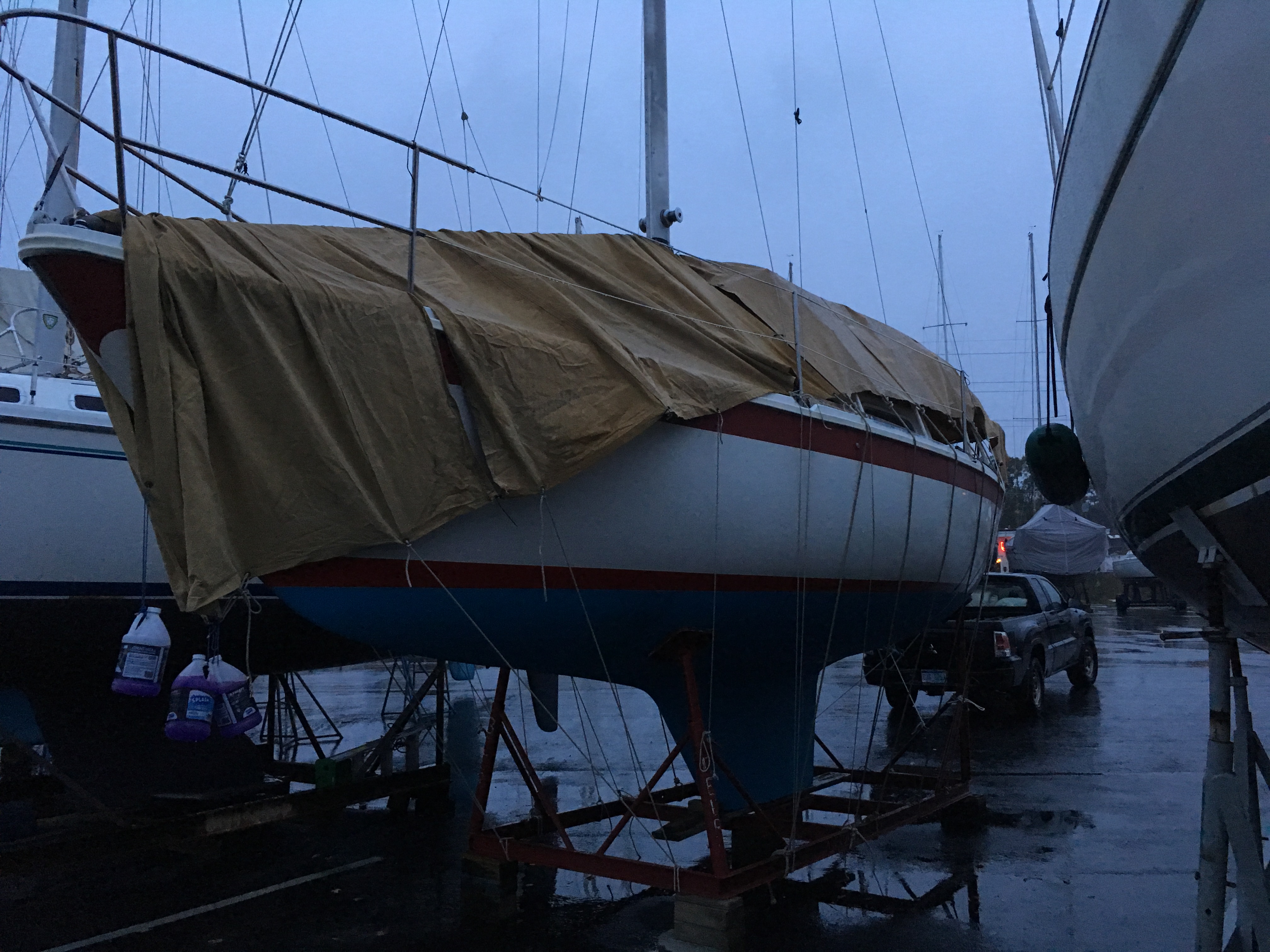 Sailing is my summertime self-care, and it’s put away for the winter. Covered in canvas tarps, soaked by the falling rain at the very end of the day.
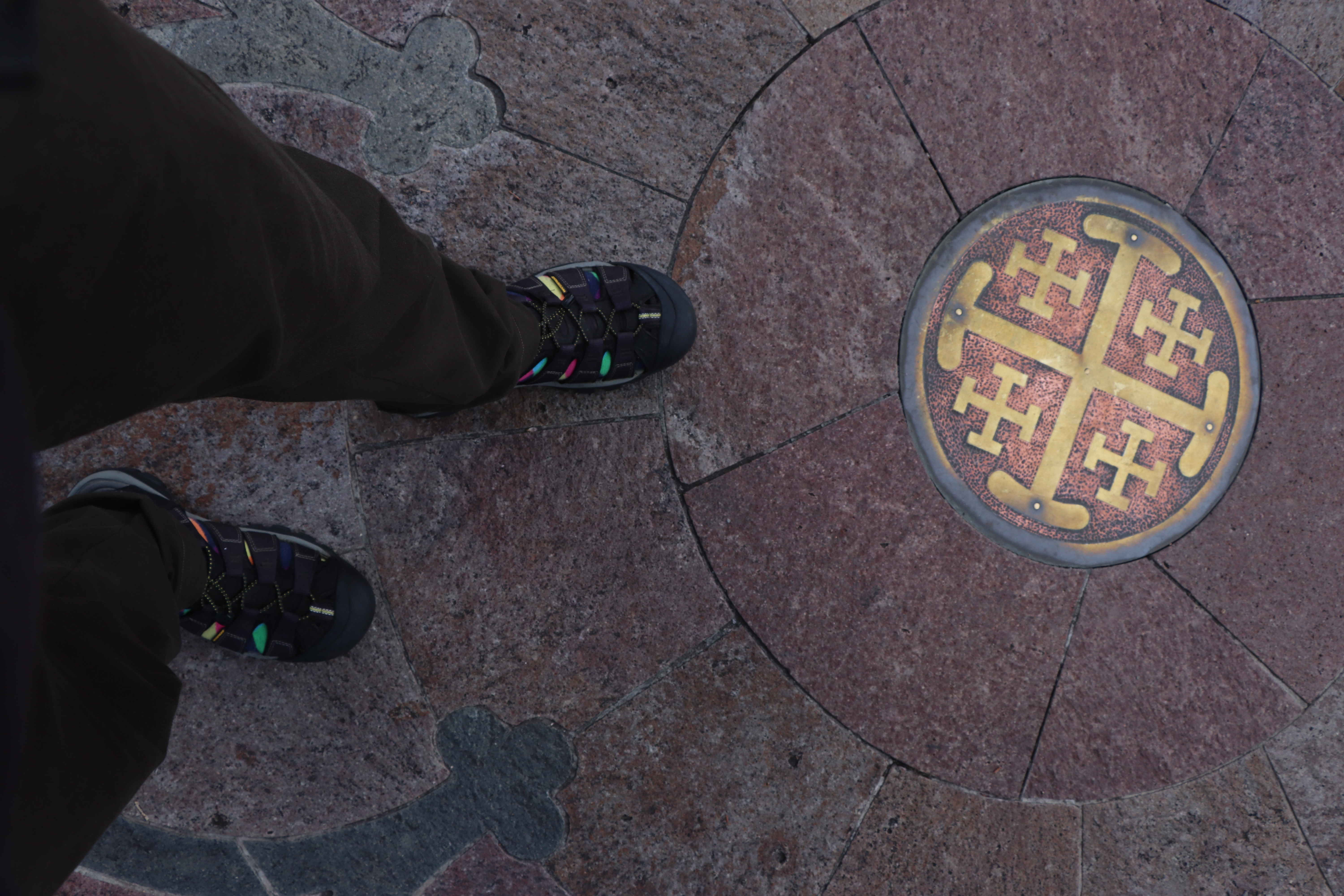 Arriving at the center, standing in silence, focused on my feet and the polished brass emblem at the center, grateful for this opportunity to walk a labyrinth once again, I knew what to do next.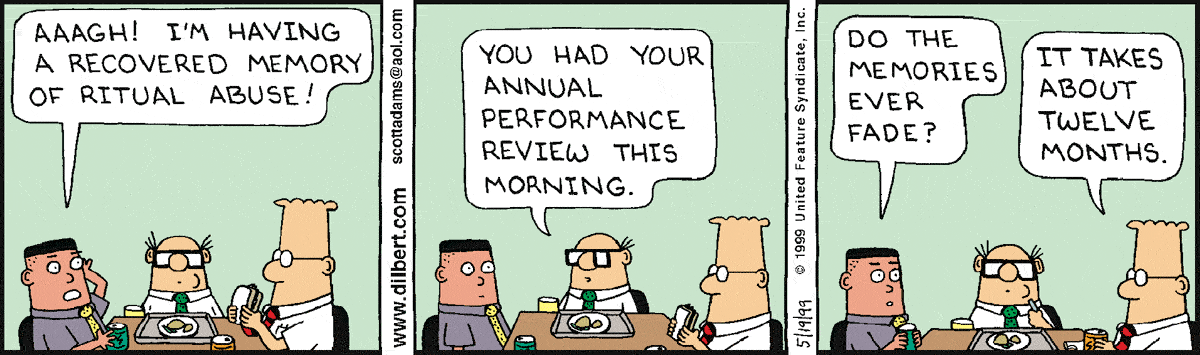
 A lot of churches call their main gathering space a sanctuary. Some are sanctuary churches where people may go to escape a powerful government that wants to send them back to very unsafe places.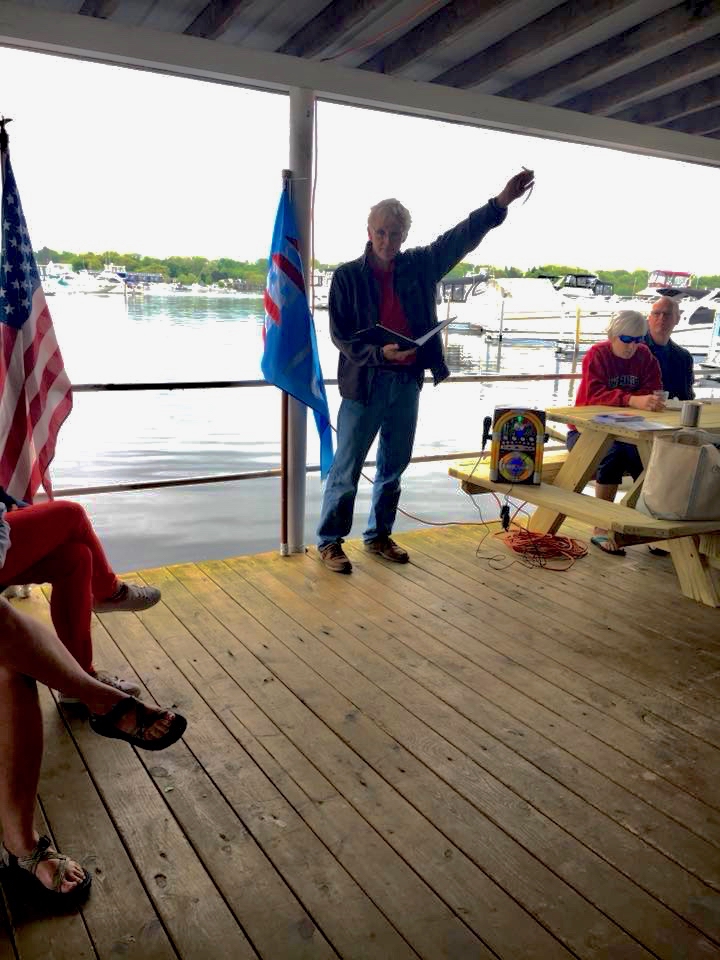
 Feather in the Wilderness