Ineffable

My last essay was my sermon. It’s been a month or more since I preached. As an infrequent preacher, the responses from those that felt touched or moved by my words is powerful.

I don’t know what people that didn’t care for it thought, because they just pass by the receiving line. So all I really hear is really positive. As I poured a lot of thought, energy, and love into my writing, the positive reaction is very encouraging.

I had been reading Michael Pollan’s book How to Change Your Mind around the time that I preached. It is a book that looks at psychedelic drugs as treatment for mental illness, the parallels of the transcendent interconnectedness of the drug state, and the meditative state, how our minds close down in adulthood for the sake of ‘efficiency’, exploded open by drugs or practice.

I think being buoyed by the positive energy of the readers and listeners, coupled with a heightened awareness of the mystical placed me in a receptive place.

It was the Tuesday after I preached. It was mid-March in Michigan. That means the grass was a sickly yellow, flattened by the winter snowpack. Nothing green was in sight as the winter dormancy carried on. In other words, the scene wasn’t what you would expect to have a transcendent experience. I had had breakfast, and I was standing in my bedroom, getting dressed and looking at the scene before me.

Love-Stamp-Icon-Graphic
The iconic sculpture, Love, by artist Robert Indiana as a 1973 US postage stamp. http://robertindiana.com/works/love-2/

It was then that I felt so amazingly loved by the world and everyone on it. And just as I thought, ‘Wow’, I had the major shift to ‘I love everyone and everything in the world.’ I was awestruck in that moment, and I sat on the bed and looked out at the sickly yellow grass and saw astonishing beauty, and my love flowed. ‘Even him?’, to that one who has harmed so many in our country. Even him. Wow.

A month has passed, and the awesomeness has faded somewhat. The process of understanding the experience, and making meaning from it continues. I know right where the feeling is, and I go back to it like a talisman, and I feel it just as plainly.

I’ve spent the better part of the month thinking about love. I’ve been thinking of my loved ones, and that amazing expansion to ALL of the loved ones in the mystical experience. I’ve been thinking about people that I love, and still love, even separated by space, time or boundaries. For me, in my pondering, love doesn’t have an off switch. I’m careful about saying, ‘I love you.’ I don’t want to make others feel like they have to say it back to me just because I feel love for them. I’ve spent most of the month wondering how I was going to put into words the experience I had which really cannot be expressed by words. Ineffable.

I’ve been thinking about the dystopian despair, fear and cynicism that dominates and dictates our culture, and how we interact. I reflect, and experience anew, this astonishing love that disrupts all of that: I will not despair, fear or be cynical when being loving will change all of that.

I know where I was mentally, merely two years ago, where I couldn’t feel that I could love myself. It’s a feeling that I will remember, and contrast with a feeling of love pouring forth in extravagant portions.

The poets have said: ‘All you need is love….Love is all you need.’

Love to you.

Harold
 

Staying Forgiven, Part 2

IMG_0871

Delivered my sermon yesterday to the congregation of Edgewood United Church.

I think that consumed more of my attention and why my weekly essays have become more erratic. To make that up to you, here’s the whole sermon. Please comment if you choose.


Staying Forgiven

Harold Beer

March 17, 2019

I’ve been writing a essay on my blog just about every week since I preached about a year ago. These essays take maybe two or three minutes to read, and take at least two or three hours to write. Honestly, Pastor Liz, and to all our other clergy members, I don’t understand how you can write a new sermon every week.

I looked at my essays, my observations and realizations, and thought I could maybe craft a sermon from them. I found that that just wasn’t going to work out, because they were complete in their four or five hundred words, so I wasn’t going to preach this season. But, then a date opened up, and it had a topic attached: Forgiveness. I thought about it for a bit, didn’t think it would be too difficult, and besides, no blank page syndrome.

But as I sat with forgiveness on my mind, and on my page, I saw this: forgive is a compound word: for and give. That ‘give’ part seems important. Forgiveness is a gift. It’s not required to be given, and, as a gift, it’s not required to be accepted. I’ve been thinking about forgiveness for past few months. The sermon title came to me quickly, in the middle of the night. This gave me direction and an uncomfortable feeling, quite troubling actually, so I did what many of us do: Practice distraction. I ‘googled’ forgiveness and I started to look at articles, essays and all the things that the Oracle of Google had found.

I watched a brief video by the former Lutheran pastor, Nadia Bolz-Weber. She describes forgiveness as being bad-ass. That forgiveness is about being a freedom-fighter, and the free people are dangerous people because they aren’t controlled by the past. Forgiveness, in her opinion, cuts the chains to the past and let’s you live in the present.

I also came across an article that was written by Melissa Dahl in New York magazine with the title: 17 things we know about forgiveness. I’ve selected a few for you:

#1 – Scientific literature on forgiveness dates back to 1989.
(Prior to that, forgiveness was mainly studied by philosophers and theologians)

#2 – Cats never forgive
#5 – Nothing is unforgivable (I’m struggling to believe that, but I hope it is true.) #8 – Forgiveness comes easier to younger children

#16 – Generally speaking, religious people are more forgiving. But those who consider themselves spiritual are more likely to practice self-forgiveness than those that consider themselves religious.

This one captured my attention, so I tracked down and read the 2013 study: “Research on Religion/Spirituality and Forgiveness: A Meta-Analytic Review”

Over the past few years, the number of Americans that self-identify as religious has been falling, and those that self-identify as spiritual but not religious has been rising as was asked in a 2017 Pew Research Center study. This difference between being religious, or being spiritual but not religious is clear, I think, in the story of Jesus of Nazareth. Jesus knew the rules but rebelled against many of the rules of his religion. Remember how he was chastised for healing someone on the Sabbath. Jesus knew the rules, but he rejected them, choosing, I believe, to live a more spiritual life.


At the end of Jesus’ life is the story of the Last Supper, a story of denial and betrayal. You

remember the story of the Last Supper, the apostles that Jesus loved, and they him. They gathered in Jerusalem for their passover dinner that remembers and celebrates the Israelites freedom from Egypt. During that dinner, Jesus spoke of the future, of his imminent death, and that Peter would deny knowing him, and that Judas would betray him. I’ve been pondering that. Jesus knew his disciples better than anyone else. I think of Jesus as an intuitive and sensitive person. I don’t think that he knew what Peter and Judas were going to do by magic, or because he was the ‘Son of God’. He just knew.

Imagine the scene. I have the paintings of the Last Supper in mind. Close your eyes if you want. Imagine this thought: You know your best friend is going to hurt you, and you tell them about it, before they do that hurtful thing. How would it feel to know that? How would it feel to be told that? I think that in telling them what they were about to do, he, at the same time, also offered them forgiveness. This story is most often told on Maundy Thursday.

I hope I was clear enough when I said Maundy, as I didn’t mean or say Monday, the day we all have faced at the beginning of the work week. Rather, Maundy comes to us through our English roots, and from the Latin, Mandatum. Maundy is the name of the ritual of foot- washing, that we’ll undoubtedly hear about during Holy Week, the week between Palm Sunday and Easter. The Latin phrase that begins with ‘mandatum’ and is the commandment that Jesus said, the mandate, ‘That you love one another, as I have loved you.’

If you’ve been at Edgewood on Christmas Eve, you’ll remember the lights being dimmed. All of the lights are dimmed and switched off. On Christmas Eve we end up bathed in candlelight, each candle adding to the collective glow, and each candle reflected in the wonder from on high. The lighting in this sanctuary for the Christmas Eve and Maundy Thursday services are almost identical.

But Maundy Thursday is different. As much as I enjoy the services here, it is Maundy Thursday that means the most, that touches my heart the most. It is by far the most spiritual of all our services. We recount the story of the Last Supper that night. One part is used every time we have communion, about the bread and the cup. The story of denial and betrayal is felt more than heard, as I can imagine being there. At the table, in the garden, in the streets and in hiding, I can imagine being there. At Edgewood, our Maundy Thursday service ends in silence, and the dim illumination of a single solitary candle. If there’s any talking in the hallway afterwards, it’s in the hushed tones of people that have been deeply moved.

I’ve always thought of myself that I was most like Peter in the story, but recently in my study and reflections while sitting with this story has me identifying more as Judas. Now, Peter was told that he would deny knowing Jesus three times before the rooster crows the next morning. Judas: I think he was the apostle of high ideals and judgment, who wanted the nard, the extravagant expensive ointment that Mary of Bethany used on Jesus’ feet, to be sold and the money used to help the poor. Judas, the one who betrayed Jesus. Judas, who couldn’t undo what he had done, couldn’t find a way to ask for forgiveness, wouldn’t accept the forgiveness that was offered, and couldn’t live with himself after hurting a person that he loved.

I like it when the Gospels don’t fill in the details, or have conflicting stories about how things happened. Then, we can imagine what might have been truth. After Jesus’ resurrection, he appears to the women who were followers of Jesus, and by some accounts to Peter. I wonder if that’s when Peter apologized? Did Jesus reiterate his forgiveness of Peter? Something surely happened then, because later on in the story, Jesus declared that Peter would be the foundation stone of the Christian Church.

And alas, poor Judas, who would not live to apologize, and would not live into forgiveness. Some accounts will say that Judas was possessed by Satan or demons. Often this image is used to describe those struggling with mental health issues and so I will make it clear to all of us, especially those of us that work at or struggle to be mentally healthy, we are not possessed. In my identification with Judas, I think he could no longer find a way to accept the pain that he caused without turning it inwards.


Writing a sermon for me is like a good therapy session. Hard truths are faced, preconceived notions are challenged, cast aside or transformed. One of those ‘easy sessions’ that turn towards profound. I used to think that I was pretty good at forgiving others, and terrible at forgiving myself. But over the past few months as I been writing this sermon I’ve found that I’m not very good at forgiveness. I’m more like Forgiveness Fact #2 – Cats never forgive. I really want to be more like #8: Forgiveness comes easier to younger children. I think the judgmental part of my personality can be dominant and overbearing. I know that I have hurt people that I love. I’ve apologized, corrected my ways into the future, and they have forgiven me. But I haven’t seemed to stay forgiven. No, my loved ones have been, and are great, they didn’t retract their forgiveness. But I just can’t seem to stay forgiven. I am working very hard to forgive myself. But, my head gets filled with loads of negative thoughts, the gift of forgiveness becomes distant, making it hard to live myself. Staying forgiven is what I’ve been struggling with for years. Staying forgiven is what I’m working now. Staying forgiven is my growing edge. Self-forgiveness may be just beyond my reach right now, but I hope not forever. I do want to be more like #8: Forgiveness comes easier to younger children.

About two months ago, I was at a memorial mass, and in the part where the protestants have nothing to do, I started thumbing through the hymnal. (I’m kinda’ a church nerd too) Way in the back, there are indices, first line, title, tune title and meter, and a topical index. I knew I was going to preach about forgiveness, so I went searching through the ‘F’s’ for forgiveness. And I couldn’t find it in the index. Couldn’t find it on the first pass, or the second – as I was looking for a longer list. But finally I found the listing: Forgiveness — see Mercy.

Using a synonym like mercy for forgiveness changed something in me. It’s only a different word for the same thing, right? Staying forgiven might still be a problem for me right now, but is staying merciful? Can I be merciful to myself? Perhaps I can do that, as it seems far less judgmental.

Self-forgiveness can also be thought as love for others, as well as love for yourself. Self- forgiveness is cutting through the chains that hold me to the past, and let’s me live here in the present. I have talked about Forgiveness this morning. As freedom, as mercy, as love. There’s a wideness in God’s mercy, says the hymn. This is our Lenten story, from the wilderness into the wideness. I pray that the wideness can see me, and each of us, into forgiveness.

Amen


Boats and hugs

I write this after have made a late-Winter trip to check on Arcturus. Mainly, it’s to check on the tarps that protect her from worst of the winter weather. This Winter the winds have been strong, so I’ve had to re-set some of plastic pipe framework we use that gives our boat a Conestoga wagon appearance.

IMG_2824I borrowed a borescope camera from the public library and took a look around the icebox that’s on board. I had a suspicious that the insulation wasn’t very good, as we’ve seen packing peanuts end up in a locker and near the bilge. I though I must have spilled some out of a shipping box, but I’d clean them up, and a couple of weeks later they would come back. The camera barely entered the space around the ice box when I ran into the packing peanuts. They probably would be better than nothing if it wasn’t for the uneven distribution, and the lack of anything to trap air around the peanuts.
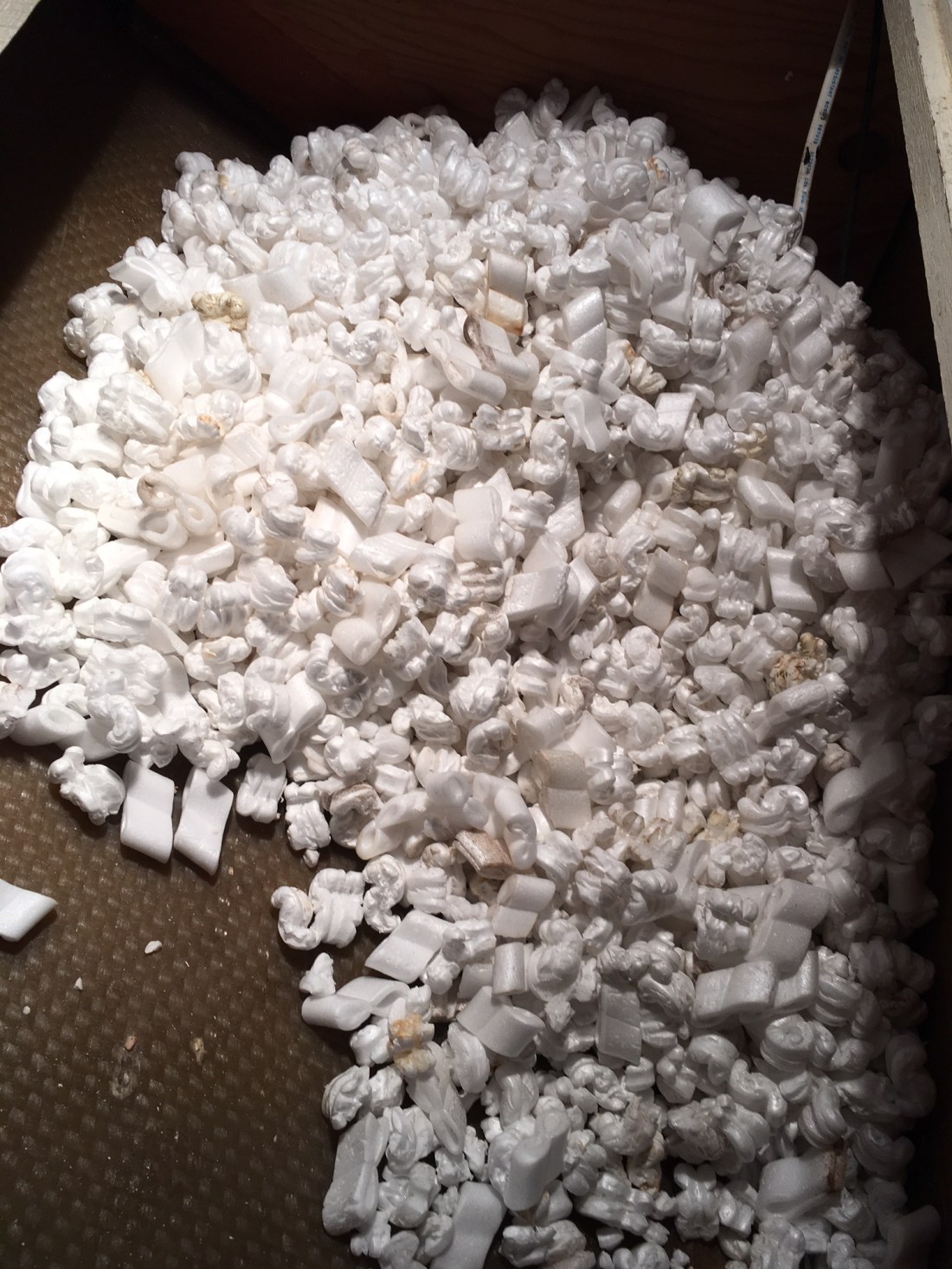
IMG_2825I started to remove them. One trash bag (wastebasket sized), two, and then I half filled the locker space near the icebox. I gave up the proceedings, and vowed to return with a big shopvac for more progress and less work. I took out three bags today, and I estimate at least another three. I’ll figure out a method to get better access and install some poly-iso foam boards in place of the peanuts. This will all be sealed up with spray foam and tape where needed.

And it’s March. On my mind is an anniversary of restarting therapy two years ago. It has been two years of attaining most of the goals that I set for myself. Two years of taking much better care of myself. Two years of building up better boundaries for myself. Looking back, I can see how low I was, and how close I was to disaster. And sitting here, two years on, I feel pretty good. I might always need medications to get my brain chemistry into the healthy zone. I don’t expect to end therapy anytime soon, but I can imagine stretching out the time between sessions. I believe I am going to make it.

I’m also thinking of friend that is looking for a therapist, and all that that entails. When you start therapy, you feel pretty much like shit. And the progress seems really slow at first. I think I’ve written about the sudden realizations when I’ve felt better. If you know someone that is in therapy right now, would you tell them how strong and courageous they are? Tell them how much they are loved. It means a lot. And ask them if they would accept a hug. You might tell them about a hugging meditation from Plum Village https://plumvillage.org/mindfulness-practice/hugging-meditation/ that you learned about.

Spring for us northern hemisphere folk is less than two weeks away. You can make it. I can make it.

Share your love.

Michigan to Miami

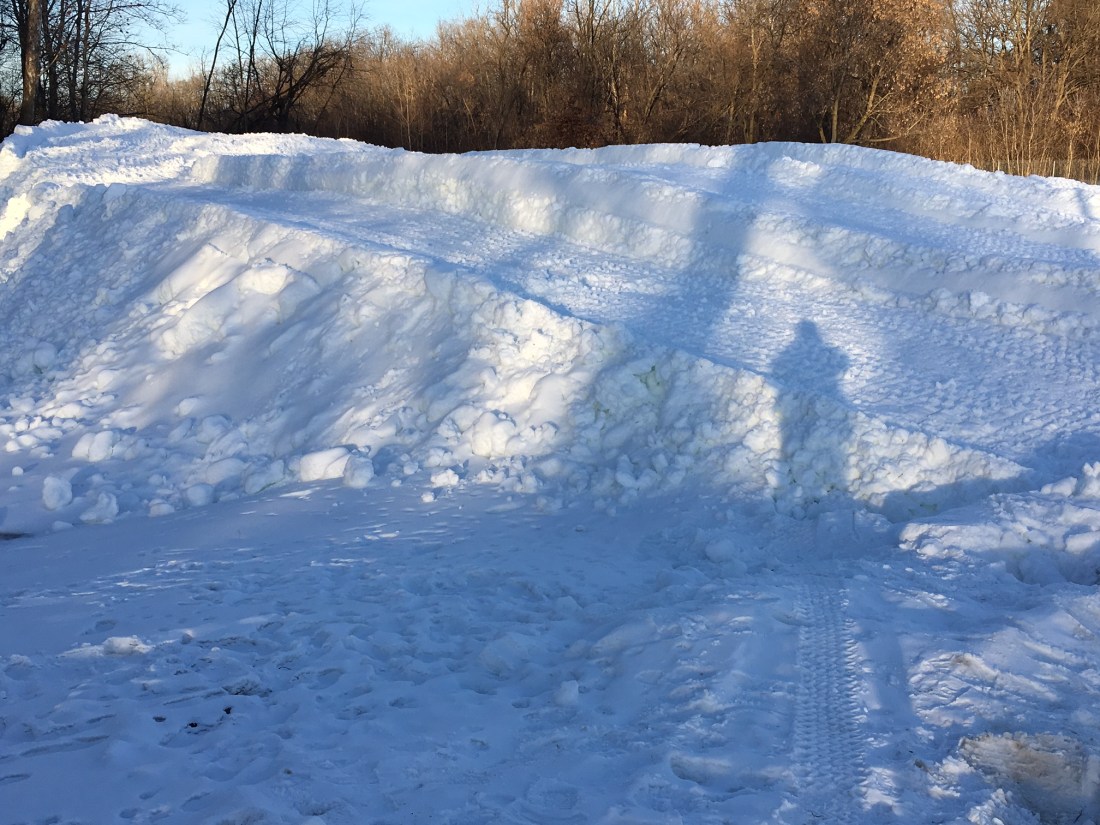
When you live in Michigan like I do, the winter can just wear you down. Lately, it’s been so cold to make you not want to go out-of-doors. The snow in Lansing has been uneven, a nice four or five inches followed by rain only two days later. And then it’s the clouds that go on for days, and days. The sky might clear just before sunset.

So, when I got a great deal on a brand-new, but never used, no longer needed, won’t someone take this off of my hands and out of my spare bedroom sail, I was told by my dear wife that we needed to go to Pompano Beach, Florida to pick it up. Although it’s lightweight, the package would be pretty big.

We left on a miserable, schools are closed, winter’s day driving at speeds around 40 to 50 miles per hour until we got to the point where it was no longer icy. That was about three hours of what would have been a twelve hour driving day that expanded in fourteen.

It’s a very long way to southern Florida, and our two day journey was over 1450 miles.

But the next morning, after spending two hours in the bright sunshine on the beach, I almost forgot about the long drive. I didn’t quite realize how much my body and my mind was craving the warmth, and the bright sun (neither of which are available in Michigan during winter). I’ve been supplementing vitamin D for about a year and a half, I use artificial sunshine (a very bright light panel) and all this helps but it’s not like sandals, shorts and a t-shirt with the bright, dare I say, hot sun shining down.

It’s a Michigan hot sun. I’ve only been in Florida twice during the summer, and that’s a totally different kind of weather that unless I’m neck deep in the ocean, I’d prefer not to experience.

IMG_2396We’ve spent a few days exploring Merritt Island, bird watching and alligator watching, the latter something one doesn’t do in Michigan. And we’ve adjusted our plans to stay in the deep South one more day to avoid the cold rain, and to delay the inevitable journey back into winter.

A delightful respite that I hope carries me through until the snow melts away for the last time this winter.

The strangest thing about traveling from the cold to warm is when the temperature for the car heat switches seamlessly in air conditioning. And this morning as we travel home, the 78 degree setting of A/C in Titusville became heat as we entered Georgia.

The Questions of Therapy

img_2716I’ve been thinking about the questions of therapy. Not the plaintive ‘How am I going to make it through this alive?’ questions, but the repetitive check-in questions that really need to be asked at every session. I am going to share them with you, because I think they should just be part of the practice of being human, and honestly answered may do much to help us get through another week.
‘How has your mood been lately?’ This is like taking your temperature, or the barometric pressure. Day by day, over a week’s time, and we’re in touch with the highs and lows of our mood, and some of the events or feelings that can push our mood up or down.

‘How have you been sleeping?’ Sleep is so important. I know that when I’m not sleeping well, my mood sinks. And when my mood sinks, I don’t sleep well. It’s a good measure of anxiety. I prefer uninterrupted sleep, but that is not often possible living in an urban environment. Noise will wake me. It’s supposed to, by design. A survival mechanism, certainly, but triggered too often and your peaceful night’s sleep is wrecked. I’m hearing the words of a friend right now, ’Earplugs,’ she’d say.

‘How are your family members?’ The health of your people, and that includes the four-legged family members, affect your mood.

We all have our worries. Often, work or money, or lack thereof, has a huge effect on our mental health. Relationships, struggles with a balance of quiet, alone time and community time, the relentless darkness and cold of a Michigan winter. Feel free to add whatever else distresses you here, and you have a pretty good picture of how worries stack up.

Rarely in therapy do we talk of the current events, although they certainly have an effect. The destabilizer-in-chief is not good for my mental health, and so I have had to pull the plug on paying attention more than a handful of minutes per day. There are others that can stay involved and stay healthy. It won’t be me right now.

And that’s okay because that’s self-care. Intentionally not doing the things that are unhealthy, and doing the things that are healthy. My unhealthy things have been pushing myself to do more, getting caught up in negative emotions, and putting my needs last. My healthy things are walking and biking, being in nature, sailing, writing, and adding the things that bring me joy. 2019 will see me at more live music events because for too long I’ve done without that.

Stay warm, folks – we in the mid-west are in for it.

Church geek

I suppose I’m a church geek. Maybe it comes from having written liturgy, designing a worship service, or being in a church choir. I’ll often browse the hymnal looking at inclusive language (not exclusively male pronouns for God), or hymns that I haven’t met before. Way in the back of the book where the indices are is my go-to spot. There’s the song titles, tune titles, first lines, metrical indices. The New Century Hymnal that my home church uses has an index by the revised common lectionary, a three year pattern of scripture readings for every Sunday and hymns that are thematically connected.

I was at a memorial mass for a former colleague from work earlier this week, and there’s a part in the mass where non-Catholics have time to look around. I pulled the hymnal out and started to browse the topical index. You might remember that I’m going to preach a sermon in March on the topic of forgiveness. So I was looking for a hymn or two about forgiveness. First pass through the ‘F’s’ and I couldn’t find forgiveness. Second pass through and I couldn’t find it. I was looking for a larger section, as forgiveness is rather a large part of Christianity. But there it was: Forgiveness — see Mercy, Reconciliation.

That’s been playing in my head this week ever since. Forgiveness — see Mercy.

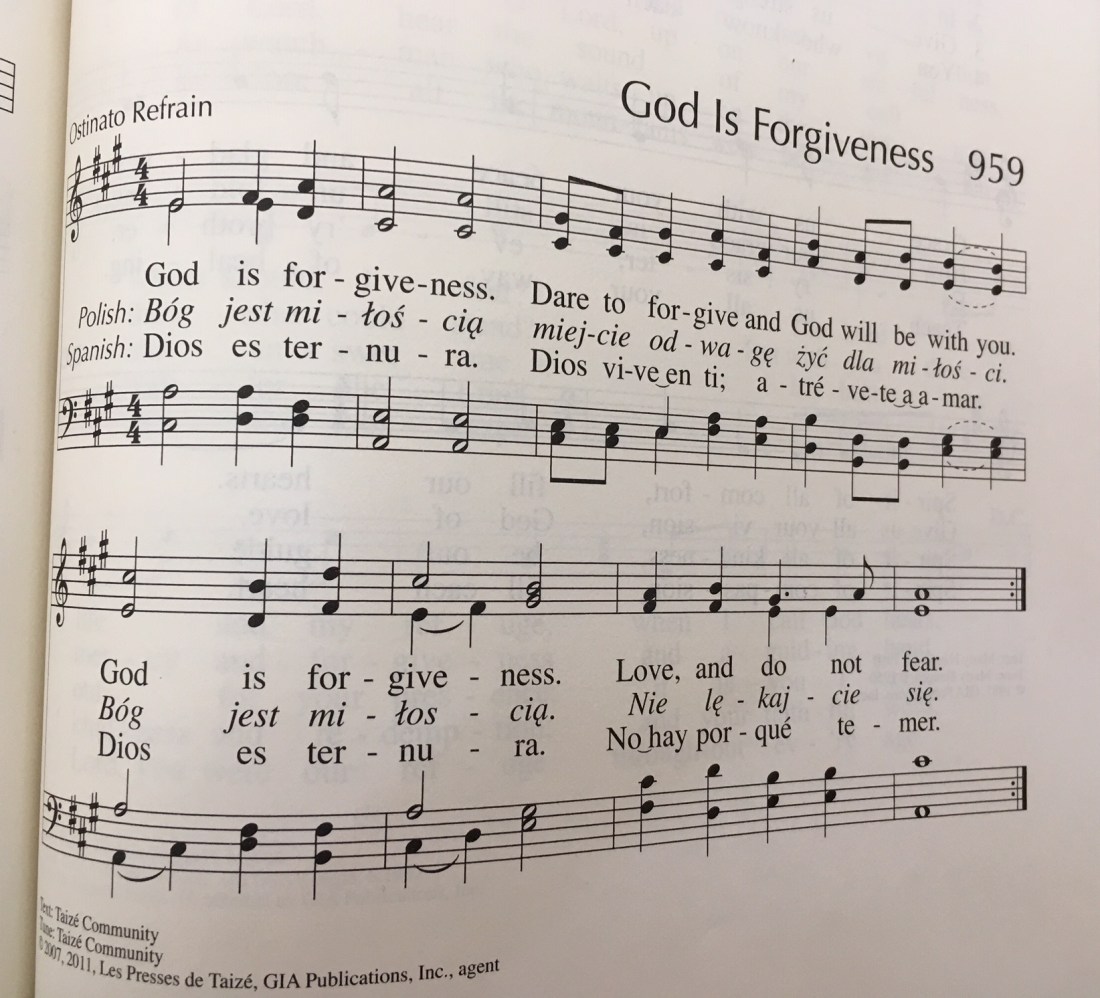
Oh, I did find find a new tune: A Taizé song called God is Forgiveness.

img_2693

But Forgiveness — see Mercy, that was a priceless find.

Therapy

I receive therapy for my mental health. I’m way better than I was two years ago, and it’s been a really long time since I’ve felt this good. And still, I see my therapist.

The other day, I spent a lot of time in the car driving around picking up things for my work. I was thinking of this question: Why therapy? There are too many catalytic events that can cause mental illness to list. I think about mental health quite a bit. When I look back over the times when I’ve been severely depressed, I can pick out circumstances or triggers. This caused that. Simple. Except it’s not. This is why I have this theory of catalytic mental illness. Like a catalyst in a chemical reaction, it’s often just a little thing that can have a huge effect. Sometimes, a lot of littler things, but still it adds up.

Epoxy is a resin combined with a hardener. The resin is this goopy sticky stuff that stays goopy until you add a tiny amount of the catalyst that sets off a reaction that turns the resin into a solid. It’s magical in a way, but it’s really just chemistry. A good bit of mental illness is just chemistry. Neurochemistry. I take some drugs that alter my neurochemistry, and I do things like getting out into nature, writing and going to therapy that also alter my neurochemistry.

fullsizerenderMost people who will read this gets it. You’ll have also journeyed through depression and so you can relate to what I’m saying here. To put this another way, take a look at your hands. You’ve probably scraped them on something in your past. Maybe you’ve had a cut, or a splinter, or that tiny whisker of a wire that you can barely see that sticks out just enough to cause pain. Or that split in your skin right by a fingernail. Sticking out like a sore thumb is an idiom that’s grounded in the protective mechanism that we all use. Gash your hand really bad and you’ll rush to the emergency department for medical care. Splinters and what not can often be dealt with by yourself, but sometimes they get infected and you need to resort to medications to help the healing along. Occasionally, some scar tissue or a cyst will form around a wound from long ago, and only an expert can help remove it.

I feel like I use my hands a lot. I can get pretty cut up over time. On occasion, I can wear gloves to protect my hands, but often they just get in the way. Maybe, if you never used your hands they’d never get hurt. Maybe, if you always wore gloves they’d never get hurt. Maybe.

I’m really fortunate to have someone that help heal my hands when things get stuck in them, or they get infected. At some point, in a few months or a year from now, I’ll see my therapist much less often. Or something else will happen and plans will change. The future is the now that hasn’t happened yet.

I am rather liking this feeling good, while still being sensitive enough to feel pain. I am taking better care of myself these days, and I’m pretty certain that getting to that place is partially due to store-bought chemistry. And therapy, because I want to stay feeling good enough to stay.

Early morning at the cottage

Up around six this morning, the cottage dark and still. Quietly, I switch on the light over the sink as dimly as it can be. I wrap the coffee grinder in three towels, and hold it tightly to my body to make it as quiet as it can be. Filter in the basket, ground coffee in the filter, water into the reservoir, I switch on the coffee maker. I take a seat on the sofa and look out towards the lake. Too dark to see anything other than pierhead lights blinking every six seconds six miles away. Too dark to see the tree trunks a few feet away from me. Too dark to see the waves that I hear crashing into shore.

Coffee finished, I pour a cup, and put half a scone on a plate and return to the sofa to resume the morning vigil. A sip of coffee, a nibble of scone and thirty minutes go by until the faint light makes the tree trunks visible. Still too dark to make out the sky, or the lake on beyond the trees. On the last sip of coffee in the cup, I can just see the line forming on the horizon separating the lake from the sky.

House still silent, everyone else still tucked in their beds, this is a time to be lost in my thoughts. This morning, though, I have no thoughts other than I really enjoy sitting here carefully observing the subtle minute-by-minute changes as the night transforms to dawn. My mind and cup are empty. It’s time to refill the cup.

img_2118Fuzzy shapes begin to show near the trunks are all I can make out of the branches that I know are there, barely visible in this pre-dawn illumination. The treehouse appears out of the darkness, and three distinct shades of grey, the snow on the bluff, the dark grey of the lake, and the lighter shade of the sky are my backdrop for trees in the foreground.
Variations of grey in the sky appear as I hear the soft padding of feet in my bedroom. Shortly, I hear a cupboard opened, and a mug set on the counter in front of the coffee pot. The refrigerator opens and I hear the sound of half-and-half being poured, followed by coffee.

Silently, she sits next to me on the sofa as two people now maintain the morning vigil. Twigs and grasses can be seen now, and the sky reveals that it’s cloudy again. The faint patterns of the waves can be seen now as we talk as quiet as we can as to not wake up the others.

In just minutes, this spell will be broken and the day will begin.

Longest Night

This is the first Christmas season for this blog. My eldest son’s birthday is just ten days before Christmas, and I clearly remember that first Christmas when our family became larger. The baby’s first Christmas ornaments on the tree. Our exhaustion and fatigue that carried over from moving in to our first house just five weeks before into a level of feeling barely competent to care for this little human being. The Advent and Christmas stories, the waiting for the birth of our Christopher and waiting for the birth once-again of Jesus, changed that year for us. Christmas changes when you have children, as you retell the old stories and see the season through a young person eyes.

‘More ‘ights, more ‘ights,’ was the cry of the two year old as he grieved the end of Christmas, when the light displays were switched off, the decorations put away, and the bleak mid-winter regained its hold. Not yet ready to slip back to the darkness of winter, his call of ‘‘more ‘ights, more ‘ights” continued through to the end of January.

As we have steadily moved in our orbit around the sun, and the sun apparently dips to its lowest zenith of the year, I, too, cry out for more light. November and December are tough months here. Less than one third of the daylight hours are sunny. It’s when I have to bring out the artificial sunshine to help displace the gloom. Seasonal affective disorder or SAD is what they call it. I call it the normal adaptation of mammals to the winter season when our bodies say it’s time to hibernate.

IMG_2665

I feel good going into these darker days. Better by far than two years back when seemingly all of the audacity of hope was sucked away.

I went to a Blue Christmas service this past Sunday. Not so much for me this time, as I’m in a better place. There were the mothers and wives grieving the deaths by suicide. The sister grieving her sister’s family lost over Lockerbie thirty years ago. And perhaps more tragic than all, the young woman that lost her family this year, disowned by her family because of who she is. She’s a courageous woman that just found a new family in the church.

Finally, if you haven’t already put the National Suicide Prevention Lifeline number in your phone: (800) 273-8255 — please do so. You or someone you love may need it. And in your Christmas and New Year’s gatherings, perhaps you can share it with just one other person.

Putting images into words

I don’t know how to write. I think writers must have these words and phrases all figured out in their heads before they sit down with their notebook or laptop. Words and phrases just waiting to be spilled out onto paper. Only rarely do I have the words. Most of the time, I have a picture, an image, maybe a little dream fragment that lingers and these are what I try to describe with words.

I have a part-time job that I drive to on a weekly basis. It’s seventy five miles away. On a good day, it’s an hour and fifteen. When the traffic is horrendous, it’s two hours. I find myself, lately, driving in silence for at least the first hour. In the past, I’d have the radio on for company, but nowadays I use the time to think.

I written before about bicycling, and how ‘inner truths’ come into my mind whilst the rational brain part is focused on all the details of bicycling. I think I’m doing the same thing now when driving. Most of the time, my driving is automatic and everything is being handled without intervention. It’s then when the inner truth telling begins.

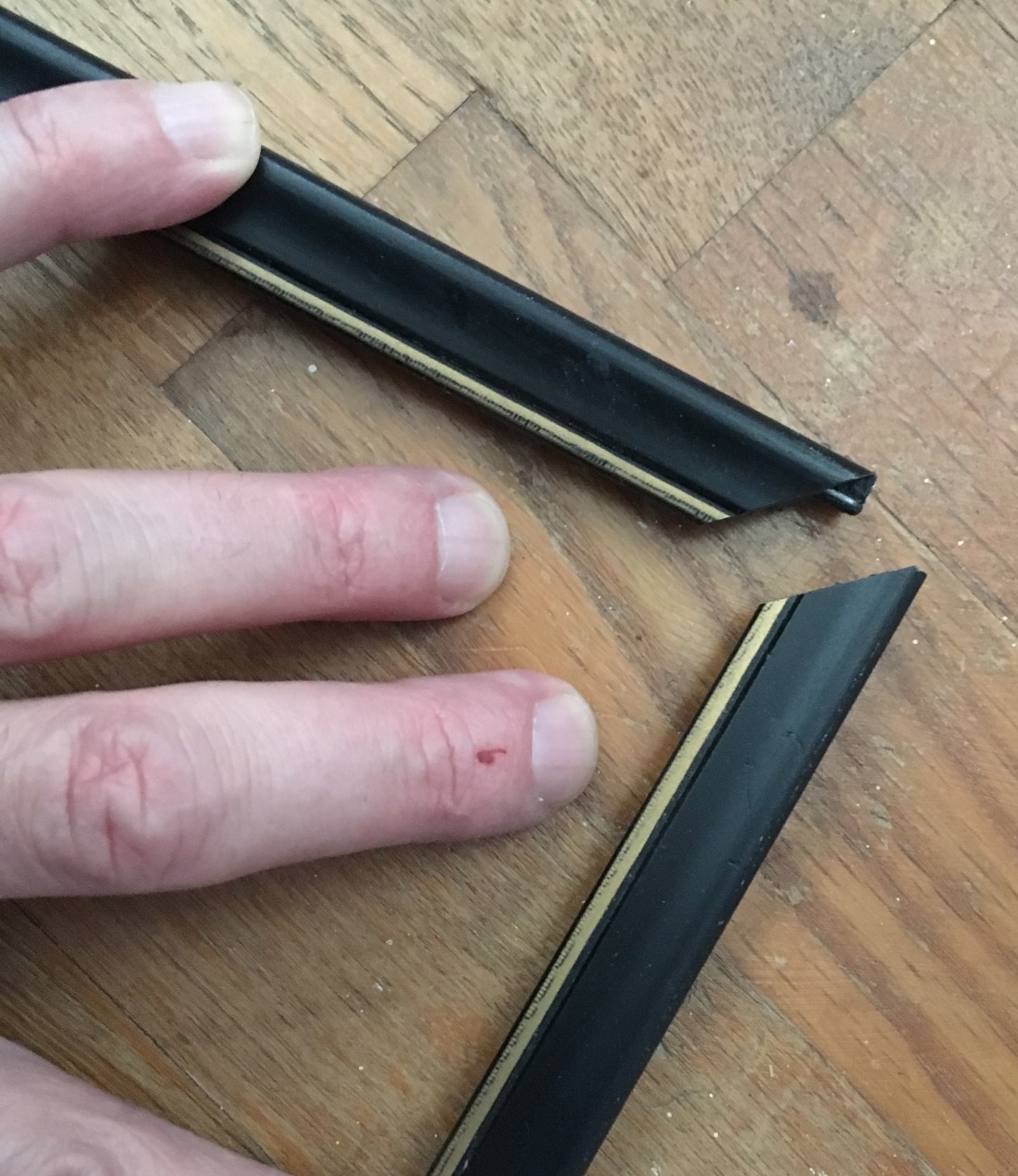
I know exactly why the image came to be in my dream. A strange image of ‘then now’ and ‘now now’ rolled together without any passing of time. I’m sure it was because I looked through my photo library over the past ten years, collecting photos for a project. The dream image was of me picking up glass from a framed photo that I had knocked to the floor. The glass pieces were super sharp and all of my fingers were cut, blood dripping onto the floor, the glass, the photo. I was thinking about picking up the photo and sliding the glass pieces into the bin, but I was certain that the glass would slash through the photo and ruin it in the ‘then now’. I get a metallic taste in my mouth when I’m bleeding, and this dream image was complete with the taste of blood. And in the same moment, in the dream state, my now healed fingers were gently picking up the pieces of glass, placing the shattered glass in the garbage.

FullSizeRenderI’m left with this broken picture frame, a slightly cut and blood spattered photo, and questions. Should I try to repair the frame? Throw it all out and let it go, to try to forget any of it happened? Tuck the photo into a box and hold onto it for some as-yet-unknown reason?

I suppose part of the way I’m feeling is from doing my current job: repairing old things. Like I can go back in time and fix the problems that I created. In some way, if I did the best I could at the time, if I can take it a little less personally, if I can give myself the gift of love, of self-forgiveness, it’ll be better.