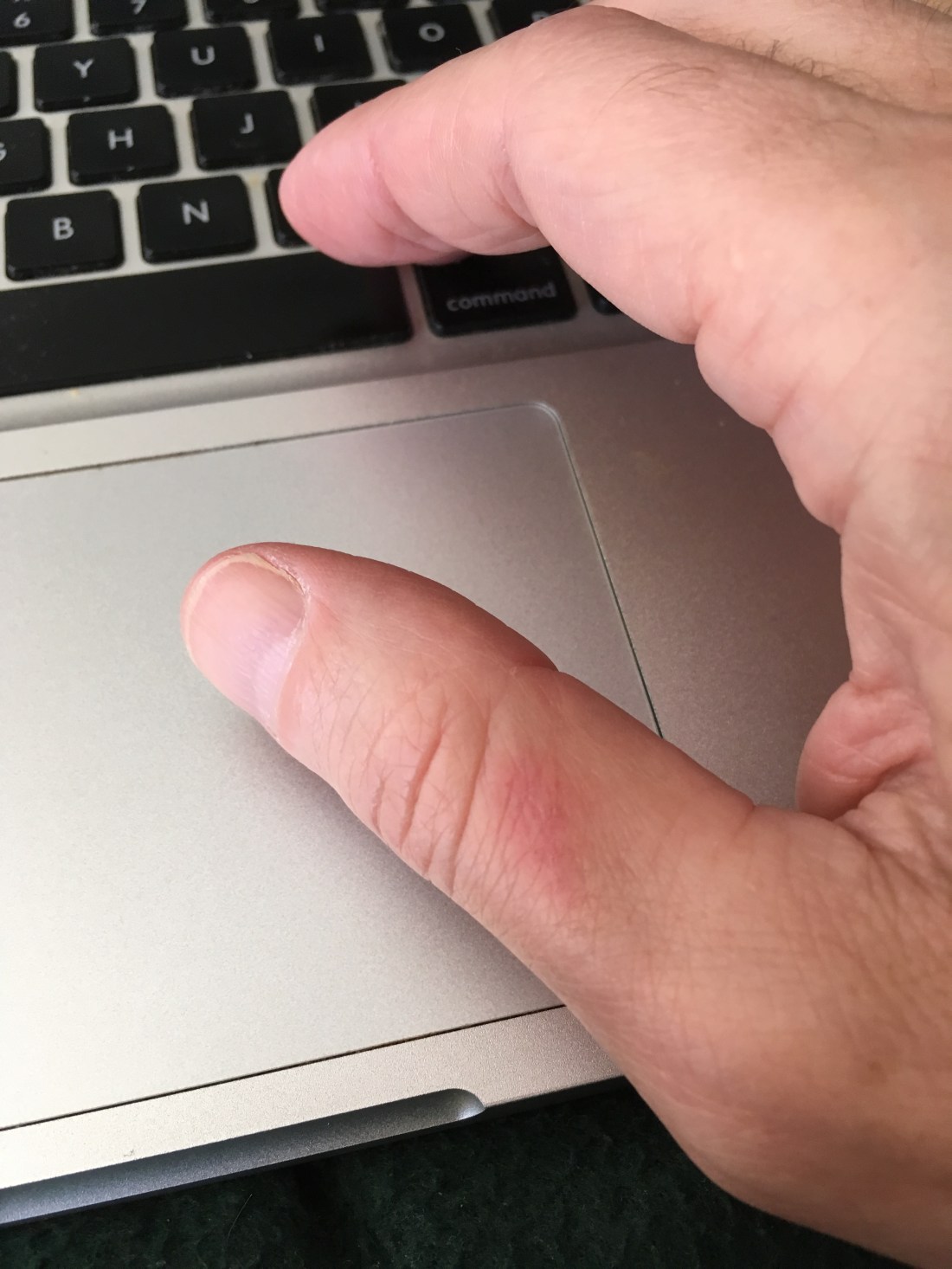
About three weeks ago, I burned my right thumb with a heat gun. I burned it near the knuckle, and at the time I did it, I thought it wasn’t so bad and kept working on my task. A few minutes later, I put my thumb into ice water and I wished I would have done that sooner. It was pretty clear to me that it was a second degree burn. Fortunately, I’m left-handed but I use both hands equally as well. It went from painful to very sensitive to ‘it still hurts’ and now it just feels weird.
Last week, I read an article that a friend from my former workplace. She wrote about how exhausting it was being with a lot of people, and mentioned her Myers-Briggs personality type. Now, I don’t need a test to know that I’m introverted, caring, kind, intelligent, observant with a side of detachment. I don’t need a test to know where my gifts are, nor where my weaknesses are. I completely identify that, for me, being with a large group of people is exhausting. Still, it got me thinking about the job that I retired from about five years ago, a job that I held since, and the job I held before.
I started my first job in broadcasting about forty years ago. For the most part it was fabulous. The hardest part was it was a full-time job that was really two part-time jobs glued together. My managers were awesome, Art Timko especially so. When you are treated as a human being, with care and trust, by someone that really wants the best for you even when it means letting you go – well, it doesn’t get better than that. And sadly, it never got better than that. That radio station was a family, who worked their butts off because of the support we received from Art and from each other. There was a free flow of communication. I didn’t know how special that place was until I left.
The next job was just one job, full-time, and it paid considerably more. And it was fine, at first. And there seemed to be a sense of community, for awhile anyway. But under the surface, there was deceit and distrust. The basic management style was to hold on to information, to manipulate, and those that worked their butts off were exploited until they finally learned that your effort meant little to those in charge. We went from lean and mean, to just plain mean. Don’t get me wrong, there were people that cared and supported each other, and I counted them as friends. They were my colleagues. Management, not so much.
I hung in there. I served on a mission and goals team, suggested improvements, and almost all of that work went unheeded. When my children were small, I was told that my first priority was to the station. But my first priority was to my family, and from there the internal conflict began.
There was my first major depressive episode that I sought treatment. It was brought on by that internal conflict, too much work, from broken trust and some other stuff I won’t talk about here. I stopped working for a few weeks while to get away from dangerous choices, and healed enough to go back. I had thought that this was situational depression, and if I quit and went somewhere else, I would not learn to cope and I’d probably bring it with me to the next job. People from work seemed, on a whole, to be a threat to my well-being. We didn’t want any contact from work until I was well enough to go back. I don’t know if that was disseminated from management to the rest of the staff, my suspicion (from the experience that managers used information as power) is that very little was shared. There were a few people that stayed in touch, not because they couldn’t follow ‘rules’ but because they cared a lot about me, and they knew the workplace wasn’t very healthy, and were highly sensitive to the dysfunctional situation.
I went back to work, wary and cautious. I mainly kept to myself, steeling myself before going in, focusing on my work, getting it done and getting away. I had just started graduate school, too, but that was fulfilling and enjoyable. Over time, the work budgets got even tighter, and people that retired were simply not replaced. This caused a lot of stress for me as it really meant I was on-call virtually all the time. I wanted to quit, but I stayed with it because my family needed my benefits and my earnings. I kept at it for another twenty years. Towards the end, I don’t think I was very kind or caring to my colleagues (sorry, my friends – I was in full-on survival mode).
What does this all have to do with a second degree burn? If I match up the burn with the major depression, then the recovery from each was painful, then very sensitive, to ‘it still hurts’. In a week or two from now, the burn I experienced will be gone except for a little discoloration. Twenty-five years on from that episode of major depression, I went through to ‘it just feels weird’ and back to somewhere around very sensitive or ‘it still hurts’. Maybe another year or so, it’ll get better. It’s really clear to me now that I trend towards depression when stressed or in conflict. The best thing for me is to move on, and let go. I know this, but what I really want to do is fix it.
If anyone from my former workplace is reading this, I feel badly that I was less than kind, or focused more on getting the job done and moving on to the next thing. You really have no idea what I was dealing with, or how painful it was to re-open a wound last year that was unhealed from 25 years ago.


 There’s a poem that I keep coming back to. You have those days, I imagine. The to-do list keeps getting longer the more you things you tick off. The calendar balloons to fill those gaps that you left just for yourself. Where the unplanned writes over the planned. When it just all seems like too much.
 I’ve been walking in my neighborhood a lot lately. We have a miniature poodle that loves his walkies, and when it’s not pouring down rain, he usually is walked three times a day for a half hour or so.
 Do you have a special tree? What is it about your special tree makes it special to you?
 I suppose I think of trees differently than many people. My surname, Beer, derives from an Old English word, bearu, meaning grove or woods. In the West Country of English, where my grandfather was born, people have worshiped and revered trees. The Celts passed through that land on their way to Ireland, and of course, the Druids were there long before that. I wonder if that could explain my need to be amongst the trees.
 Feather in the Wilderness